Expertises and services
Axis 1: Characterization of materials
|
|
Superconductors (S) |
Conductors (C) |
Magnetic materials (M) |
Resistive materials (R) |
Insulating materials (I) |
|
Films (tick and thin) (F) |
-REBCO films on substrate (coated conductors) |
-Metallic conductive coatings (Cu, Ag, Zn, Ni, Cd, etc.) |
|
-Resistive barriers (oxides in thin films <100 nm) |
-Insulating barriers (oxides in thin films >100 nm) |
|
Laminated materials (L) |
|
-Hastelloy laminates (substrates for superconducting wires) |
-Silicon steel laminations (for transformers and electric machines) |
-Carbon fiber composites |
|
|
Bulk materials (B) |
-REBCO bulks -REBCO tubes |
-Conventional metals and alloys (Cu, Al, etc.) |
-Magnetic steels and superalloys -Permanent magnets (all types) |
-Power semi-conductors |
-Fiber glass composites |
Experimental characterization of material properties
Electrical properties
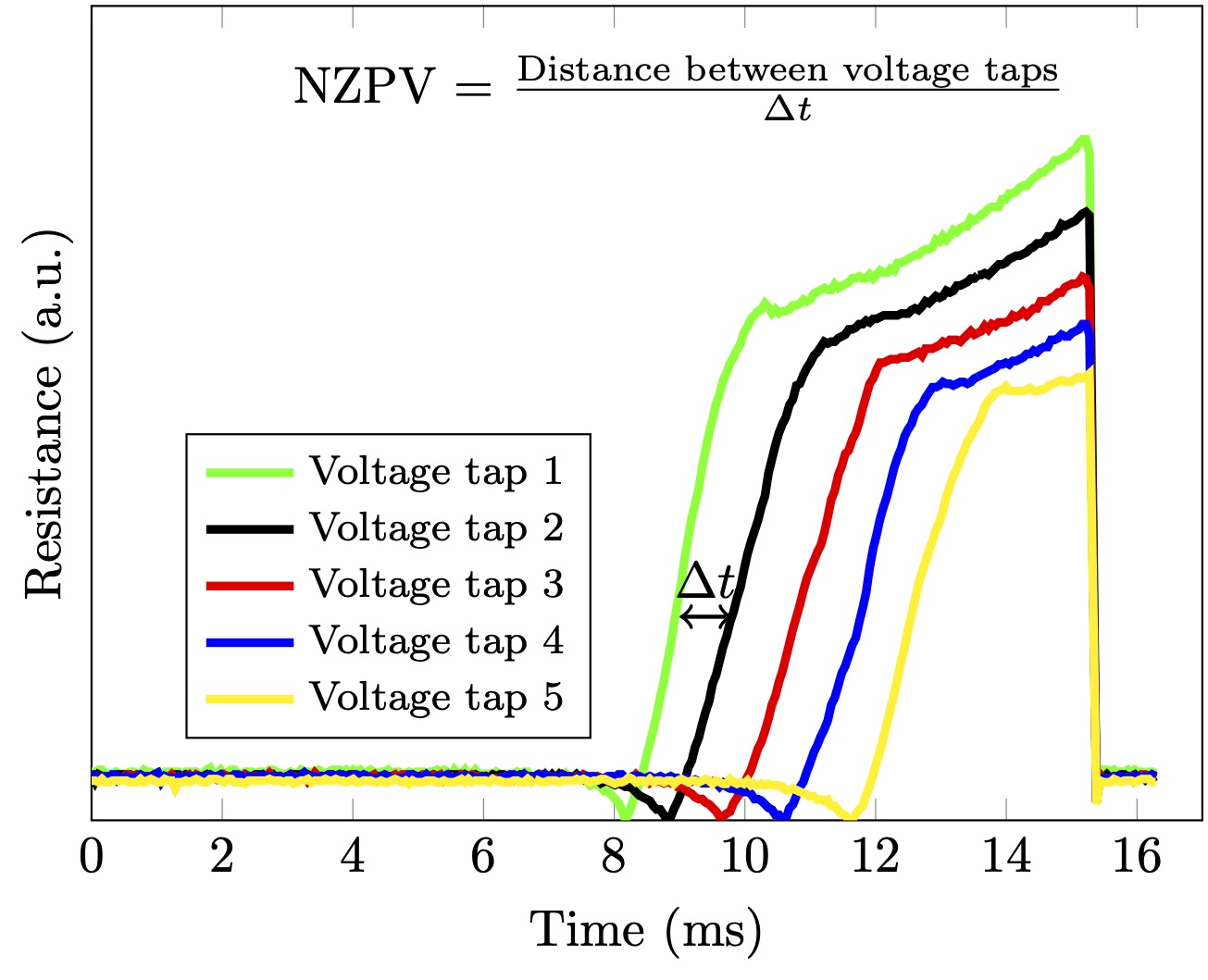
-V-I curves, critical current measurement (Ic), NZPV, MQE: multi-probe measurements
-Resistivity/Electrical Resistance/Hall effect: multi-probe measurements
-Contact resistance: different methods depending on the material considered
-Current transfer length, surface potential: electrode matrices, multi-probe measurements
Magnetic properties
-B-H curves: home-made hysteresis meter (20-900 °C), VSM
-Iron losses: custom setups
-Magnetization of permanent magnets: custom giant magnetometer
-Electron paramagnetic resonance spectrometer: cavities available at 9, 17, 24, 31 and 38 GHz
Mechanical and structural properties
-Thickness of thin layers, surface roughness: profilometer
-Structure of matter: wide variety of microscopes
-Hardness: Vickers hardness test
-Thermal contraction: custom setups
Range of experimental parameters*
-Temperature: 10 to 300 K (in vacuum), 64 to 90 K (in liquid nitrogen)
300 to 900 K (in a low pressure Argon atmosphere)
-Magnetic field: 0 tp 5 T (in vacuum or in cryogenic liquid)
-Current: DC: 0-500 A – Pulsed: 0-1800 A (<10 ms) or 0-1600 A (5-500 ms)
-Measurable voltage: 100 nV to 250 V, up to 80 simultaneous readings
*Depending on the type of sample and its size, the experimental conditions may be restricted.
Axis 2: Physical modeling
Modeling of the electromagnetic and thermal behavior of various devices
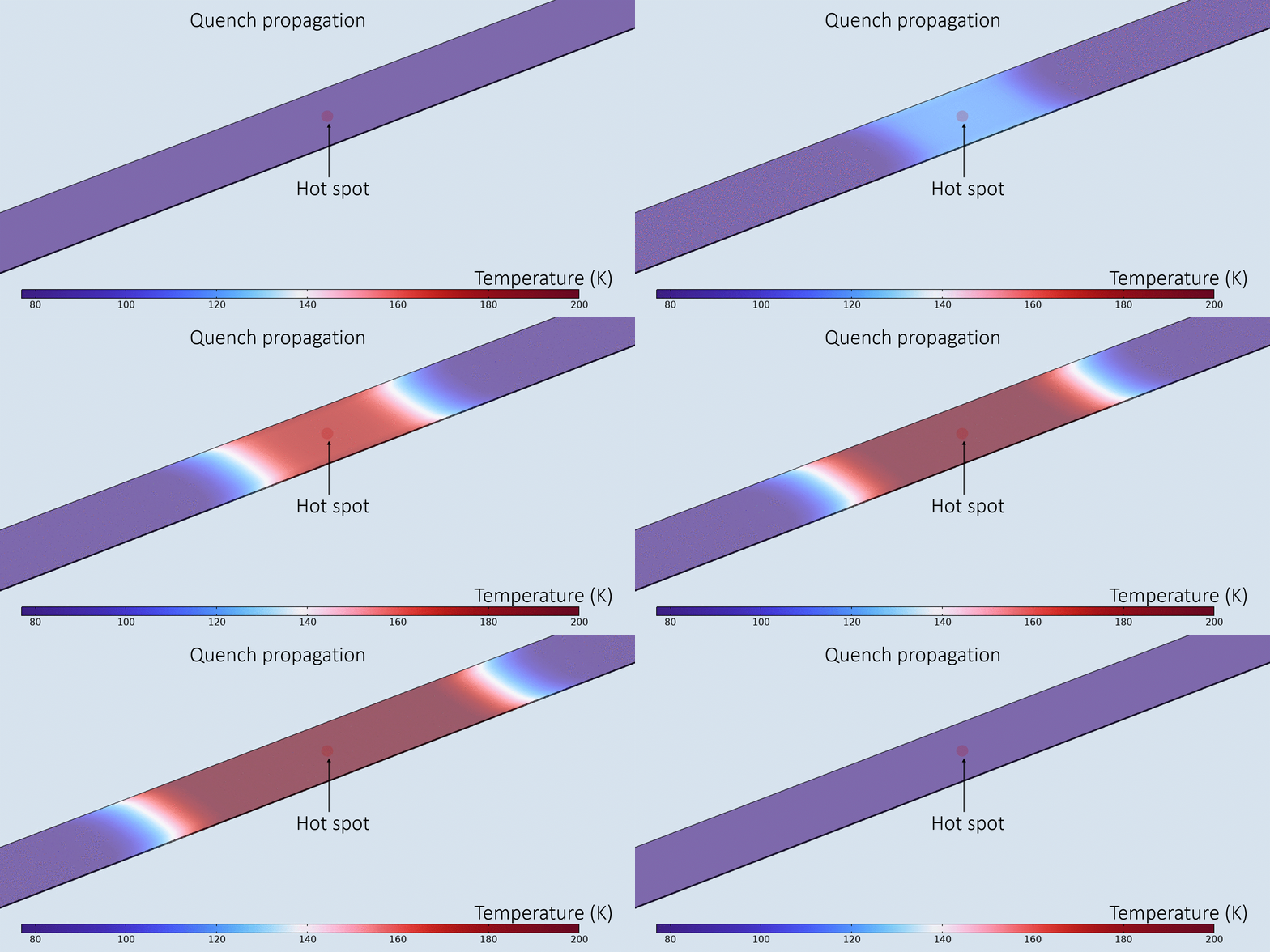
-Short-circuit current limiters / Hot-spot propagation phenomena
-Magnetic levitation systems
-Power transmission cables
-Motors/Generators, etc.
-Electrical network
Algorithms for numerical simulation of electromagnetic and thermal problems
-Finite element method: home-made and commercial codes
-Integral methods: home-made and commercial codes
Materials modeling
-Mathematical models of materials from measurements
-Superconducting materials
-Magnetic materials (including hysteresis) and permanent magnets
-Thin films and resistive barriers
-Integration of material models in numerical simulation software programs
-Algorithms to improve the convergence of nonlinear materials in numerical simulation software programs
Axis 3: Design of devices
Design assisted by numerical simulation
-Proof of concept by computer
-Parameterization and automation of numerical simulations
-Optimization of dimensions
-Performance prediction
Manufacturing techniques
-Surface plating: electroplating, sputtering, chemical methods (electroless)
-Additive manufacturing: cold spray, laser powder bed fusion
-Etching of surfaces: electro-polishing, masking + chemical attack
-Oxidation of surfaces: chemical attack + anodization
-Oxygenation of superconductors: oven with gas flow or pressure (up to 700 °C)
-Soldering: regular, with special alloys, of Litz wires, at low temperature
-Low temperature materials: cryostats, custom fixtures and sample holders, etc.
-Reel-to-reel processing enables continuous treatment of long-length tapes
-Cabling machine for superconducting cable fabrication
Axis 4: Testing and instrumentation
Data acquisition equipment
-Acquisition cards: many types, from very slow to very fast (up to 500 MS/s)
-Oscilloscopes and other conventional measuring instruments
Custom electronic circuit design
-Pulsed current sources: several types (5-1000 ms, 1-100 ms, DC)
-Voltage measurement systems: 16/40/80 differential inputs (1 mV to 250 V)
-Automated signal multiplexers: synchronized scanning of input signals
-Interconnection and signal conditioning boxes: custom designs
Specialized measurement test benches
-Zone normal propagation velocity (NZPV) and minimum quench energy (MQE) in superconducting tapes
-Quench of superconducting tapes in short-circuit conditions
-Critical temperature of superconductors
-3-D mapping of magnetic field around magnetized bodies (such as permanent magnets)
-Oxygen/hydrogen desorption measurements by differential pressure
Specialized instrumentation for power tests
-2 test areas: three-phase AC: 600 V/400 A/400 kVA, DC: 500 V/200 A/50 kW
-Power amplifiers: 2 x 5 kW/50 A/100V/50 kHz, 6 x 50 kW/200 A/250V/1 KHz
-Lightning current generator: 10-50 kA, 5 ms of rise time
-Real-time simulators: OPAL-RT, Hypersim (for prototyping of controllers)
-Conventional measuring equipment: power analyzers, current transformers, etc.
Magnetic sensors
-Hall effect, Fluxgate, Giant Magnetoimpedance (GMI), ODMR
Other specialized infrastructure
-DC and pulsed Electromagnets (up to 7 T, several models)
-Cryostats for low temperature tests (10 to 300 K, several types)
-Ovens for heat treatments or aging tests in air or controlled atmosphere (in vacuum of oxygen up to 900 °C)
-Custom fixtures and sample holders (for operation between 10 and 1000 K)
Example: NZPV measurements
Pulsed current source, up to 2000 A, with durations from ms to hundreds of ms
Temperature range from 65 K to 77 K
Spatial resolution down to 1 mm along meter-scale samples
Interested in characterizing the NZPV of your superconducting tape or cable? Please contact us so we can help you designing safe and resilient superconducting devices.